
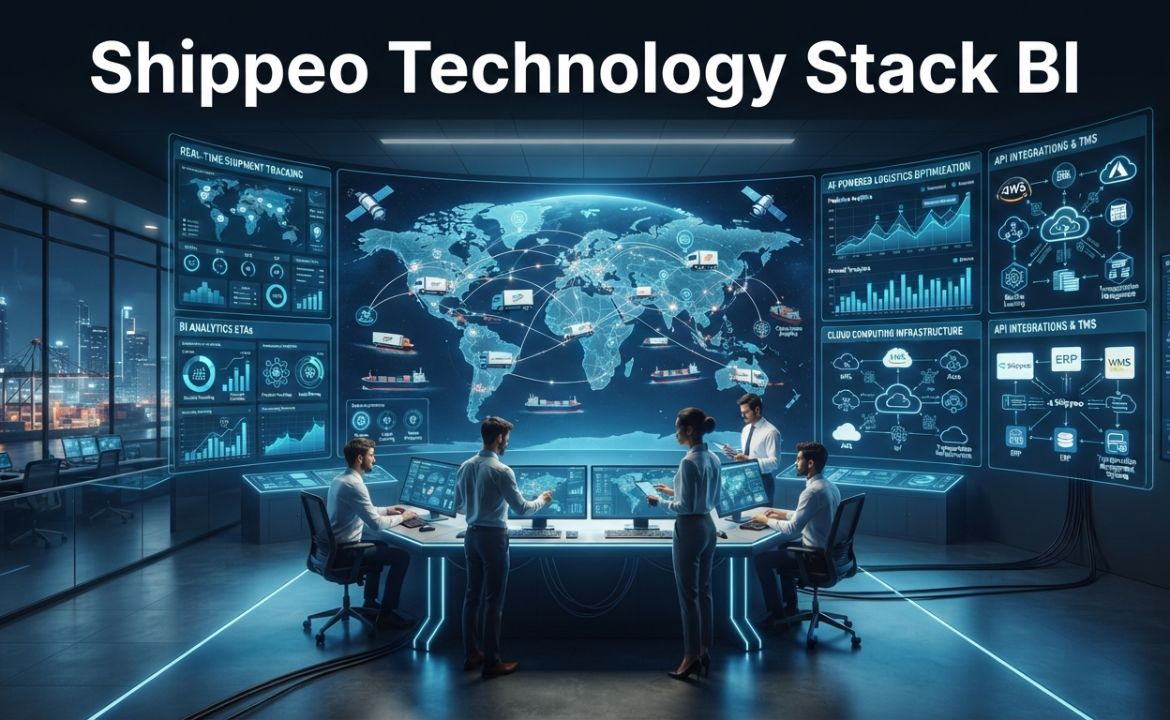
Modern supply chains generate widespread portions of logistics records every day, making Business Intelligence (BI) important for higher desire making. Shippeo Technology Stack BI refers to the generation, statistics structures, analytics equipment, and cloud infrastructure that assist Shippeo’s real time transportation visibility answers. By combining artificial intelligence, cloud computing, APIs, and advanced analytics, Shippeo Technology Stack BI lets in businesses to screen shipments, improve operational universal overall performance, and benefit precious insights into supply chain overall performance.
Introduction to Shippeo Technology Stack BI
Business Intelligence has grown to be an important part of modern-day-day logistics.
Shippeo makes use of virtual technology to accumulate, tool, examine, and visualize transportation facts, helping organizations make informed alternatives throughout the delivery chain.
What Is Shippeo Technology Stack BI?
Shippeo Technology Stack BI refers to the combination of software software software technology, cloud services, analytics systems, databases, and integration systems that manual logistics visibility and reporting.
The cause is to convert uncooked transportation statistics into massive insights that enhance planning, transport performance, and customer satisfaction.
How Shippeo Technology Stack BI Works
The technology stack gathers statistics from more than one logistics asset.
Data from GPS devices, transportation manipulate systems (TMS), corporation aid planning (ERP) systems, telematics, providers, and IoT gadgets is amassed through APIs.
This statistics is processed, analyzed, and displayed on interactive dashboards for real-time monitoring and reporting.
Core Components of the Technology Stack
A Business Intelligence platform generally is based on several interconnected technologies.
Key additives embody:
- Cloud computing infrastructure
- Data integration APIs
- Artificial intelligence
- Machine getting to know
- Real time analytics
- Data warehouses
- Dashboard visualization equipment
- Predictive analytics
- Security systems
- Mobile programs
Together, those components create a smart logistics platform.
Cloud Infrastructure
Cloud computing paperwork the muse of modern day logistics structures and offerings offer scalability, excessive availability, constant storage, and speedy processing of transportation facts without requiring agencies to preserve luxurious on premises infrastructure, this technology moreover enables global accessibility for distributed groups.
Data Integration
Supply chain facts come from many specific systems.
APIs allow agencies to connect transportation management software program software software, ERP systems, warehouse structures, GPS monitoring gadgets, and service networks into one centralized environment.
This integration improves statistics consistency and operational visibility.
Artificial Intelligence and Machine Learning
Artificial Intelligence performs a vital characteristic in transportation visibility.
Machine reading algorithms look at cargo patterns, are waiting for delays, estimate arrival instances, recognize capacity disruptions, and continuously enhance forecasting accuracy.
These smart systems help logistics businesses make proactive picks.
Business Intelligence Dashboards
Business Intelligence dashboards convert complicated logistics data into visible opinions.
Managers can screen shipment recognition, deliver trendy overall overall performance, transportation expenses, provider performance, and deliver chain inclinations using charts, graphs, and interactive dashboards.
Visual reporting makes huge datasets much less complicated to understand.
Real Time Shipment Visibility
Real time monitoring is one of the most precious abilities of cutting edge logistics technology.
Businesses get maintenance of live updates on cargo locations, anticipated arrival times, route adjustments, climate disruptions, and transportation dangers.
This visibility improves consumer conversation and operational planning.
Predictive Analytics
Predictive analytics uses historic and real-time records to forecast destiny events.
Businesses can anticipate transportation delays, optimize delivery routes, allocate assets successfully, and decorate inventory making plans primarily based on predictive insights.
This reduces uncertainty at some stage in the supply chain.
Data Security
Handling transportation data requires strong protection features.
Modern BI systems use encryption, strong authentication, get entry to controls, tracking systems, and compliance requirements to shield touchy logistics information.
Cybersecurity remains essential as companies methodically grow quantities of virtual statistics.
Benefits of Shippeo Technology Stack BI
Understanding Shippeo Technology Stack BI becomes less complex at the same time as looking at its realistic advantages.
Some of the crucial aspect advantages embody:
- Improved cargo visibility
- Better delivery ordinary standard performance
- Faster choice making
- Enhanced consumer pleasure
- Accurate predictive analytics
- Reduced transportation expenses
- Increased operational usual overall performance
- Better supply chain collaboration
- Real-time employer reporting
- Stronger statistics driven planning
These blessings help businesses construct greater resilient and green supply chains.
Business Applications
Business Intelligence permits many logistics operations.
Common programs embody transportation planning, shipment tracking, company typical usual performance analysis, warehouse coordination, stock management, customer support reporting, and government selection making.
Organizations use analytics to improve each every day operations and long-time period method.
Challenges
Implementing a present day BI era stack can present worrying conditions.
Organizations may additionally furthermore come upon facts integration problems, inconsistent facts extremely well, cybersecurity troubles, employee training necessities, and the expenses of deploying superior analytics solutions.
Careful making plans facilitates reducing these demanding situations.
Best Practices
Successful implementation starts with an easy facts approach.
Businesses ought to integrate dependable statistics belongings, preserve immoderate information, amazing, regular information, teach personnel, and often display tool regular performance to maximize the price of Business Intelligence.
Continuous improvement guarantees better lengthy term results.
Future Trends
Business Intelligence in logistics continues to evolve swiftly.
Artificial intelligence, automation, virtual twins, Internet of Things (IoT), element computing, blockchain, and advanced predictive analytics are expected to further decorate supply chain visibility and operational efficiency.
These generations will assist smarter logistics alternatives within the years in advance.
Why Business Intelligence Matters
Modern delivery chains are more and more complicated and information-pushed.
Business Intelligence permits corporations transform transportation records into actionable insights that beautify customer service, operational ordinary performance, and strategic making plans.
Companies that correctly use BI can respond faster to converting market conditions and logistics disruptions.
Final Thoughts
Understanding Shippeo Technology Stack BI presents precious perception into how present day-day logistics systems help real time transportation visibility and smart selection-making. By combining cloud computing, synthetic intelligence, tool getting to know, APIs, predictive analytics, and interactive dashboards, corporations can enhance delivery chain overall performance, lessen transportation risks, and supply better patron research. As virtual logistics continues to conform, Shippeo Technology Stack BI will provide an essential foundation for information-pushed supply chain management.
FAQs
What is Shippeo Technology Stack BI?
Shippeo Technology Stack BI refers back to the technology, analytics gear, cloud infrastructure, and facts systems used to help actual time transportation visibility and commercial enterprise intelligence in logistics.
How does Business Intelligence enhance logistics?
Business Intelligence analyzes transportation statistics to offer real-time insights, improve cargo monitoring, awaiting delays, optimize routes, and assist better operational choices.
What technologies are usually covered in a logistics BI stack?
Common generation embodies cloud computing, APIs, artificial intelligence, system learning, records warehouses, dashboard visualization equipment, predictive analytics, and cybersecurity systems.
What are the benefits of using a BI platform in delivery chain manipulation?
Benefits embody superior visibility, quicker choice-making, reduced transportation expenses, better delivery performance, stepped forward patron delight, and stronger records driven making plans.
What is the future of Business Intelligence in logistics?
The destiny includes more adoption of AI, IoT, automation, digital twins, blockchain, and superior predictive analytics, allowing smarter, greater efficient, and rather connected delivery chain operations.