
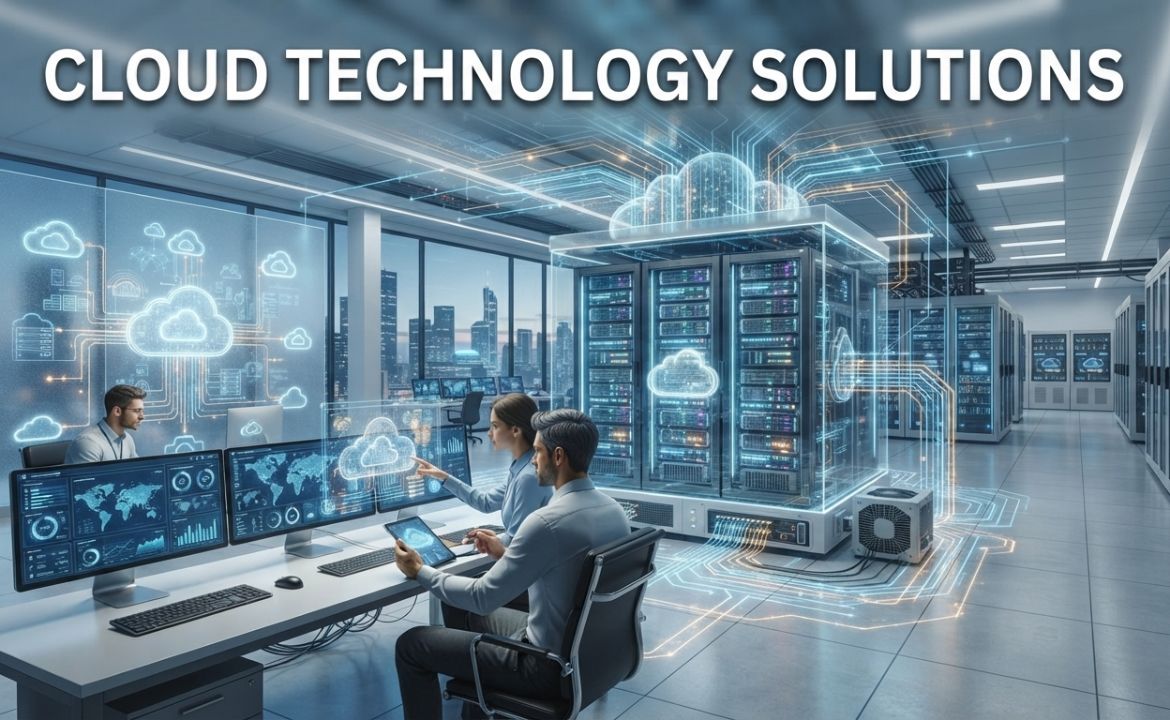
Cloud generation solutions have changed how corporations keep data, run programs, speak, and manage virtual operations. Instead of relying completely on bodily servers and local infrastructure, companies can access computing assets via net-based total structures.
From small corporations to massive firms, cloud services offer bendy methods to enhance productivity, reduce infrastructure costs, and help remote paintings. They also make it easier to scale digital assets as business requirements change.
What Are Cloud Technology Solutions?
Cloud era answers are net based total services that offer computing assets inclusive of storage, servers, databases, networking, software, and processing energy. These resources can be accessed remotely without requiring companies to maintain all the important hardware themselves.
Cloud platforms can guide the whole lot from easy document storage to complex business programs. Depending on their wishes, groups can pick public, non-public, hybrid, or multi-cloud environments.
The cloud additionally lets in groups to access applications and statistics from specific places. This flexibility has come to be in particular beneficial for disbursed teams and corporations with far flung or hybrid paintings preparations.
How Cloud Technology Works
Cloud computing is predicated on records facilities containing powerful servers, storage structures, networking devices, and safety infrastructure. Users connect with those sources through the net or non-public networks.
Cloud companies control a good deal of the underlying infrastructure, whilst customers normally pay for the sources and services they use. This model can reduce the need for agencies to buy and maintain huge amounts of bodily gadgets.
Virtualization is some other vital part of cloud computing. It permits bodily computing resources to be divided into a couple of virtual environments, supporting companies to allocate sources efficiently.
Types of Cloud Services
Different cloud service fashions are designed for special business requirements. Understanding those fashions enables organizations to pick out an appropriate solution.
Infrastructure as a Service
Infrastructure as a Service, or IaaS, offers digital servers, storage, networks, and other computing assets. Businesses can use these resources without purchasing the bodily infrastructure themselves.
IaaS is beneficial for corporations that want greater control over operating structures, applications, and computing environments.
Platform as a Service
Platform as a Service, or PaaS, provides an environment wherein developers can construct, take a look at, and set up packages. The company manages a good deal of the underlying infrastructure.
This lets development groups pay attention more on utility improvement in place of server renovation.
Software as a Service
Software as a Service, generally referred to as SaaS, delivers software program packages thru the net. Users commonly access these programs thru internet browsers or dedicated apps.
Email platforms, collaboration equipment, customer courting management structures, and on-line accounting programs are not unusual examples of SaaS.
Benefits of Cloud Technology Solutions
One of the most important advantages of cloud computing is flexibility. Organizations can grow or lessen computing assets consistent with converting workloads as a substitute for buying everlasting hardware for infrequent demand.
Cloud services also can guide commercial enterprise continuity. Data backups, redundant infrastructure, and faraway entry can assist companies keep important operations while neighborhood equipment reviews troubles.
Other primary advantages include:
- Lower infrastructure necessities
- Flexible resource scaling
- Remote accessibility
- Faster software program deployment
- Easier collaboration
- Centralized data management
- Automated updates
- Improved operational efficiency
Cloud Solutions for Modern Businesses
Businesses throughout unique industries use cloud systems for normal operations. Companies can host websites, manage databases, examine information, speak with personnel, and run enterprise packages through cloud environments.
Small corporations can particularly benefit due to the fact they are able to get entry to advanced computing services without constructing large IT departments or purchasing pricey server infrastructure.
Larger businesses can use cloud environments to aid international operations, software development, data analytics, synthetic intelligence, and digital transformation tasks.
Cloud Storage and Data Management
Cloud storage permits customers to store documents and records on remote infrastructure as opposed to relying most effectively on neighborhood hard drives or workplace servers. Files can then be accessed from legal gadgets and locations.
Organizations can use cloud garage for backups, document sharing, records, and enterprise facts. Access controls and encryption can assist guard touchy facts from unauthorized customers.
However, corporations should still establish backup strategies and punctiliously control consumer permissions. Moving statistics to the cloud does not dispose of the company’s responsibility for defending it.
Security in Cloud Computing
Security is a chief attention while adopting cloud services. Providers use technologies which include encryption, identification control, access controls, tracking, and chance detection to shield cloud environments.
Businesses also have responsibilities. Strong passwords, multi-factor authentication, employee education, normal security critiques, and suitable right of entry to permissions can reduce commonplace dangers.
A properly designed cloud protection method must keep in mind each provider’s controls and the purchaser’s own structures, programs, customers, and data.
Cloud Technology and Remote Work
The increase of far flung paintings has multiplied calls for cloud-based totally collaboration equipment. Employees can get admission to documents, communication structures, assignment management systems, and business applications from one of a kind locations.
Cloud-primarily based workflows also can make collaboration simpler because multiple legal customers can paint with shared data without counting on a single workplace PC.
This flexibility can help agencies appeal to distributed groups while retaining access to important virtual sources.
Cloud Computing and Emerging Technologies
Cloud platforms increasingly aid technologies consisting of artificial intelligence, system gaining knowledge of, large records analytics, Internet of Things programs, and automation.
AI programs, for instance, may additionally require widespread computing strength and storage. Cloud infrastructure can provide admission to those assets without requiring every corporation to construct its personal specialized computing surroundings.
Edge computing is also growing alongside cloud computing. While cloud systems process big amounts of centralized statistics, facet structures can process positive facts towards wherein it’s far generated.
Choosing the Right Cloud Solution
Selecting amongst cloud services requires careful planning. Organizations must first identify their workload, records requirements, safety wishes, price range, performance expectancies, and regulatory obligations.
Reliability is another important consideration. Businesses have to study provider availability, backup alternatives, technical support, statistics recovery skills, and provider policies before making a long time period commitment.
Organizations need to additionally keep away from adopting cloud services simply because they were famous. The excellent method is to pick solutions that clear up particular business issues and offer measurable fees.
Future of Cloud Computing
Cloud computing is expected to stay a critical part of virtual transformation. AI-powered offerings, automated infrastructure control, superior analytics, edge computing, and enterprise-precise cloud platforms are possible to expand their position.
Businesses also are paying more interest to price management and sustainability. Efficient useful resource allocation and improved records middle technologies can help agencies control spending even as reducing unnecessary useful resource intake.
As virtual offerings grow to be greater sophisticated, cloud structures will continue imparting the infrastructure needed to increase and supply new programs.
Final Thoughts
Cloud era answers have become an important basis for present day digital operations. They provide companies with flexible computing sources, remote accessibility, scalable infrastructure, cloud garage, and software program offerings that could guide exclusive business desires.
As synthetic intelligence, automation, analytics, and connected gadgets hold to increase, cloud platforms will continue to be significant to technological innovation. Organizations that pick out suitable services, manage fees, and hold robust safety practices can use the cloud to build greater flexible and efficient digital operations.
FAQs
What are cloud technology answers?
Cloud era answers are net based total services that offer resources consisting of computing power, storage, databases, networking, and software programs without requiring organizations to manage all physical infrastructure themselves.
What are the main forms of cloud services?
The primary carrier fashions are Infrastructure as a Service, Platform as a Service, and Software as a Service. Each affords a one of a kind degree of manipulation and control.
Are cloud generation solutions stable?
Cloud offerings can provide strong safety through encryption, authentication, monitoring, and get entry to controls. However, groups ought to additionally well configure offerings and protect personal debts and statistics.
How does cloud computing help organizations?
Cloud computing can enhance flexibility, scalability, collaboration, information access, and operational efficiency whilst reducing the want for good sized bodily infrastructure.
Is cloud computing beneficial for small organizations?
Yes. Small agencies can use cloud offerings to get admission to expert software, garage, communique gear, backups, and computing sources without making big investments in physical servers.
What is the destiny of cloud generation?
The future consists of nearer integration with artificial intelligence, automation, part computing, advanced analytics, IoT, and specialized cloud structures designed for exceptional industries.