
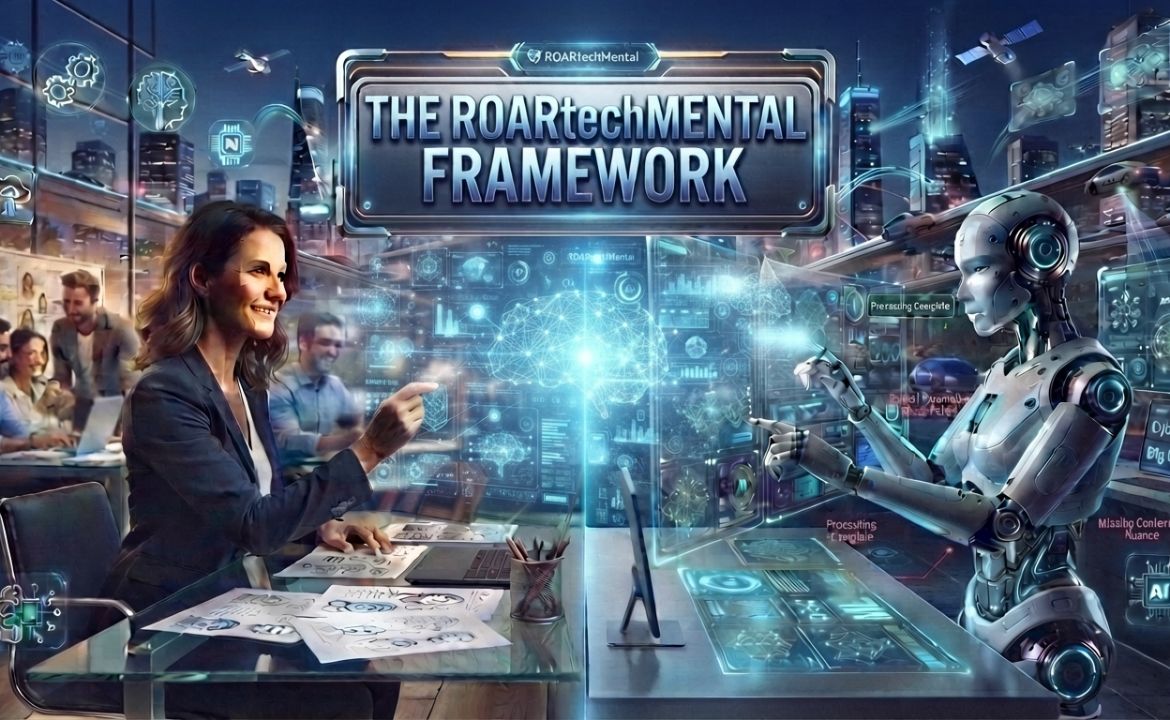
Technology has transformed almost every difficulty of present day life. From synthetic intelligence (AI) and automation to robotics and device getting to know, virtual upgrades maintain productivity and simplify regular duties. However, in spite of those exquisite advancements, one critical question remains: why technology cannot replace Humans RoarTechMental. While machines can manner facts faster than people and perform repetitive responsibilities with superb accuracy, they nevertheless lack the uniquely human features that pressure creativity, empathy, ethical judgment, and emotional intelligence.
Understanding why technology cannot replace humans RoarTechMental enables individuals and corporations to respect the strengths of both people and machines. Rather than competing toward every different generation and human intelligence, art work quality once they supplement each other.
The Evolution of Technology
Technology has advanced hastily during the previous couple of years. Artificial intelligence now powers digital assistants, recommendation structures, independent motors, healthcare diagnostics, and customer service chatbots. Businesses rely on automation to growth efficiency, reduce prices, and enhance accuracy.
Although those upgrades preserve to reshape industries, era remains a tool created and guided via the usage of human intelligence. Every software software, set of rules, and robot gadget starts with human mind, layout, and preference-making.
What Makes Humans Unique?
Humans own traits that cannot without trouble be replicated by machines. These abilities allow human beings to treat complex issues, construct relationships, and create large improvements.
Some of the most essential human strengths embody:
- Creativity
- Emotional intelligence
- Critical questioning
- Ethical reasoning
- Adaptability
- Imagination
- Leadership
- Compassion
These traits play an important feature in training, healthcare, enterprise, technological knowledge, and everyday life.
Creativity Cannot Be Automated
Creativity is one of the most powerful motives why technology cannot update humans RoarTechMental.
Artificial intelligence can generate textual content, snap shots, song, and code with the aid of studying present day facts. However, AI no longer owns real imagination or private studies. Human creativity comes from emotions, culture, memories, curiosity, and specific perspectives.
Artists, writers, musicians, inventors, and entrepreneurs create thoughts that often assignment existing understanding. Technology assists this innovative process, however it does not independently make bigger big beliefs.
Emotional Intelligence Matters
Humans manifestly apprehend emotions via empathy, facial expressions, tone of voice, and private relationships.
Doctors comfort sufferers, teachers inspire college students, counselors manual intellectual fitness, and leaders encourage agencies through emotional connection. Technology can also simulate verbal exchange, but it can not honestly enjoy compassion or emotional information.
These emotional skills continue to be vital in professions that rely on receiving genuine wit and human interaction.
Ethical Decision Making Requires Human Judgment
Technology follows programmed instructions and mathematical models.
Humans, however, evaluate conditions of the usage of ethics, values, social norms, and cultural expertise. Many critical choices contain moral questions that can not without a doubt be solved via algorithms.
Healthcare, regulation, authorities, schooling, and public insurance often require ethical reasoning beyond what computerized systems can provide.
Critical Thinking Solves Complex Problems
Machines excel at analyzing based facts, however human beings suppose beyond available records.
People evaluate uncertainty, question assumptions, explore alternatives, and increase modern day solutions for troubles without predefined solutions.
Critical wandering combines not unusual sense with experience, making it taken into consideration one among humanity’s best strengths.
Human Relationships Drive Society
Personal relationships affect almost each component of lifestyles.
Families, friendships, agencies, and places of work rely on verbal exchange, be given as actual with, cooperation, and shared research. Technology lets human beings stay associated, but proper relationships require real human interplay.
Strong interpersonal abilities make contributions to teamwork, management, and social proper being.
Technology Excels in Different Areas
Although human beings have particular strengths, era gives outstanding benefits.
Modern era offers:
Faster Data Processing
Computers examine remarkable quantities of statistics inside seconds.
This improves medical research, monetary assessment, clinical imaging, and business agency intelligence.
Automation
Repetitive duties end up greater inexperienced via automation.
Manufacturing, logistics, customer support, and management benefit appreciably from automatic structures.
Accuracy
Machines reduce human mistakes at some point of repetitive calculations and precision-based complete operations.
This will boost productivity in many industries.
Continuous Operation
Unlike human beings, machines can operate around the clock without fatigue.
This makes the era precious for tracking structures, commercial production, and cloud computing.
Humans and Technology Work Best Together
Instead of changing people, generation frequently complements human capabilities.
Doctors use AI to help scientific evaluation while making very last remedy choices themselves. Engineers rely on advanced software software to layout complicated structures more successfully. Teachers use virtual studying platforms even as providing steering and motivation that software cannot mirror.
This partnership allows companies to combine computational electricity with human judgment.
Industries Where Humans Remain Essential
Healthcare
Medical experts combine medical information with empathy and patient care.
Technology allows analysis, but doctors and nurses build accept as true with and offer customized treatment.
Education
Teachers encourage curiosity, inspire creativity, and adapt training to individual analyzing patterns.
Technology assists gaining knowledge however cannot genuinely replace human mentorship.
Business Leadership
Successful leaders encourage personnel, solve conflicts, and create lengthy-term organizational vision.
These obligations depend heavily on emotional intelligence and conversation.
Creative Industries
Writers, designers, filmmakers, musicians, and artists hold producing precise paintings pushed by means of the usage of imagination and cultural reviews.
Technology helps creative workflows without changing genuine human expression.
Challenges of Relying Only on Technology
Excessive dependence on automation creates several risks.
Organizations also can encounter cybersecurity threats, algorithmic bias, privacy concerns, technical disasters, and decreased human interaction.
Responsible technology adoption calls for cautious oversight and non-stop human involvement.
The Future of Human AI Collaboration
Artificial intelligence will retain advancing hastily.
Future trends may also moreover encompass:
- Smarter AI assistants
- Improved healthcare diagnostics
- Autonomous transportation
- Personalized training
- Advanced robotics
- Predictive analytics
- Sustainable clever cities
Despite those improvements, human beings will continue to be answerable for guiding generations through moral management, creativity, and desire making.
Why Human Skills Will Always Matter
As automation increases, uniquely human competencies come to be even extra treasured.
Future places of work will prioritize abilities such as:
Communication
Clear verbal exchange strengthens collaboration across diverse companies.
Problem Solving
Complex annoying situations require revolutionary questioning and flexibility.
Leadership
Organizations rely on leaders who encourage consideration and manual exchange.
Emotional Intelligence
Empathy improves customer service, healthcare, education, and place of work culture.
Continuous learning and private improvement will live critical lives as generation evolves.
Final Thoughts
The dialogue around why technology cannot replace humans RoarTechMental highlights an vital truth: generation is an effective device, however it isn’t always an alternative choice to human intelligence. Machines excel at processing data, automating repetitive obligations, and improving overall performance, but they cannot replicate creativity, empathy, moral judgment, or enormous human relationships.
The future isn’t always approximately human beings competing with generations, it is approximately collaboration. By combining the rate and precision of the superior generation with the creativeness, compassion, and critical thinking people, society can reap extra innovation whilst retaining the traits that make us uniquely human.
FAQs
Why technology cannot update RoarTechMental?
Technology lacks actual creativity, feelings, moral reasoning, and human reviews, making people crucial for lots of complex responsibilities and alternatives.
Can artificial intelligence completely update human people?
AI can automate repetitive responsibilities, however it cannot completely replace jobs requiring empathy, creativity, management, critical questioning, and interpersonal conversation.
What human talents are most difficult for technology to update?
Creativity, emotional intelligence, ethical judgment, conversation, adaptability, and leadership stay uniquely human strengths.
How does technology assist humans instead of converting them?
Technology will grow efficiency, automates recurring paintings, analyzes statistics quickly, and allows higher selection-making whilst humans offer oversight and innovation.
Will humans constantly be wanted within the future?
Yes. As generation advances, human creativity, ethics, emotional information, and strategic thinking will play vital roles all through industries.
Why is emotional intelligence critical?
Emotional intelligence helps people understand feelings, assemble relationships, clear up conflicts, and offer compassionate manuals in personal and expert settings.